Pacific Coast Pediatric Dentistry


The simple answer is yes, at Pacific Coast Pediatric Dentistry we confidently recommend fluoride as a safe and effective tool to strengthen teeth and prevent cavities in children. The science supporting use of fluoride is extensive, time-tested, and endorsed by leading medical and dental organizations. A 2018 Cochrane Review (widely recognized as the gold standard in evidence-based healthcare) showed that children who use fluoride toothpaste have 24% fewer cavities than those who do not.
That said, our recommendation to use of fluoride toothpaste is based on following the correct dosage guidelines for your child’s age. When used as directed, fluoride provides powerful cavity-fighting benefits while remaining safe.
We understand that some parents have questions, and that’s a good thing. Our goal is to provide clear, evidence-based information so you can feel confident in the care your child receives and the role fluoride plays in protecting their smile. We believe in educating but not pressuring and recognize that every family has its own preferences. If you prefer to avoid fluoride, we’re happy to explore alternative options like hydroxyapatite which can also support keeping teeth healthy. You can read more about some alternatives below.

The outermost layer of our teeth is called enamel and is the tooth’s protective shell. Tooth enamel is the hardest substance in our bodies (even stronger than bones) and is primarily composed of hydroxyapatite (a mineral form of calcium phosphate). When we eat or drink, especially things with sugar or starch, bacteria in the mouth produce acid that pulls calcium and phosphate out of the tooth enamel (a process called “demineralization”). If this keeps happening without enough repair (or “remineralization”), cavities can form. Fluoride is a natural mineral (found in water, soil and even various foods) that helps strengthen teeth in a few important ways:
Remineralizing Enamel: Fluoride helps rebuild (or remineralize) weakened areas of tooth enamel. Fluoride ions are attracted to the demineralized areas of enamel. Once there, fluoride attracts and acts as a scaffold for the redepositing of the calcium and phosphate from your saliva. Fluoride also helps drive minerals into subsurface areas of the tooth, reversing early decay before a cavity forms. This fluoride-mediated remineralization is more efficient and durable than what saliva alone can achieve.
Makes Enamel More Resistant to Future Acid Exposure: When fluoride is present during the remineralization process, it creates a harder version of enamel called fluorapatite. Fluorapatite is more resistant to future acid attack (with a critical pH of 4.5 rather than 5.5 for hydroxyapatite), which better helps prevent cavities from forming.
Fluoride Limits Acid Production: When fluoride is present in your saliva (even in very small amounts), it slows down the bacteria’s ability to make acid by blocking a key enzyme needed to break down sugars.
Protection Even Before Teeth Erupt: For younger children, fluoride can be incorporated into the enamel of developing teeth, making them stronger from the start.

Most reputable health organizations, including the American Dental Association (ADA), the American Academy of Pediatrics (AAP), and the World Health Organization (WHO), strongly support the use of fluoride toothpaste and varnish with children due to its proven ability to prevent dental cavities and decay. Topical fluoride is so effective because it delivers fluoride directly to the sites of active demineralization where it can aid in enamel repair. That said, some parents express concerns about fluoride exposure, and our goal is to provide information so you can make the right decision for your family.
We understand that news reports and related (often misleading) online commentary about scientific research can be concerning for parents. To ensure we are providing the best-evidenced based care, we closely monitor relevant research, including the review and analysis conducted by the National Toxicology Program – State of the Science Concerning Fluoride Exposure and Neurodevelopment and Cognition: A Systemic Review (which appears to be the primary source of recent increased online discussion regarding children’s Fluoride consumption). Here is our clinical perspective on this recent NTP Review, and why we, along with the ADA and ADP, continue to recommend fluoride as a safe and vital tool for your child’s health.
Most substances that are beneficial or even essential to our health when consumed at recommended levels (like water, vitamins and minerals) can become harmful or toxic when consumed in excess. This concept is summed up in a well-known saying in medicine: “The dose makes the poison.” Fluoride is no different.

For children younger than 2, the American Academy of Pediatric Dentistry recommends using a tiny smear of fluoride children’s toothpaste, about the size of a grain of rice. Your eyes are not deceiving you, a very little goes a long way. This small amount is safe to swallow and still provides important protection against cavities as baby teeth come in. The American Academy of Pediatric Dentistry recommends that you start brushing your child’s teeth as soon as the very first tooth comes in because as soon as your child has a tooth, plaque can begin building up on the surface of the tooth and causing decay.

For children ages 2 to 6, the American Academy of Pediatric Dentistry recommends using a pea-sized amount of fluoride children’s toothpaste. This still may not seem like much, but it’s just the right dose. At this age, kids should also start learning to spit out excess toothpaste but this small amount is still perfectly safe to swallow.

Children 7 and up are ready to start using a standard bead of toothpaste (you still don’t need to go overboard here). At this stage, children have usually mastered spitting, which is important! But here’s the twist: Once they spit, encourage them not to rinse with water! Leaving that thin layer of toothpaste on the teeth helps fluoride keep working throughout the night. If you feel confident you child is consistently spitting out the toothpaste, you might also consider transitioning to an adult toothpaste, which has a slightly higher concentration of fluoride.
Our first priority is ensuring your child has a lifetime of strong, healthy teeth, which is why we generally recommend fluoride toothpaste as the most effective defense against early childhood cavities because of its unmatched ability to stop decay and strengthen enamel. However, we also believe in providing a comprehensive toolkit for every family’s unique needs. For parents seeking a fluoride-free path, or those looking to add a secondary layer of protection to their child’s routine, there are several science-backed, biomimetic alternatives that we are proud to support and discuss.
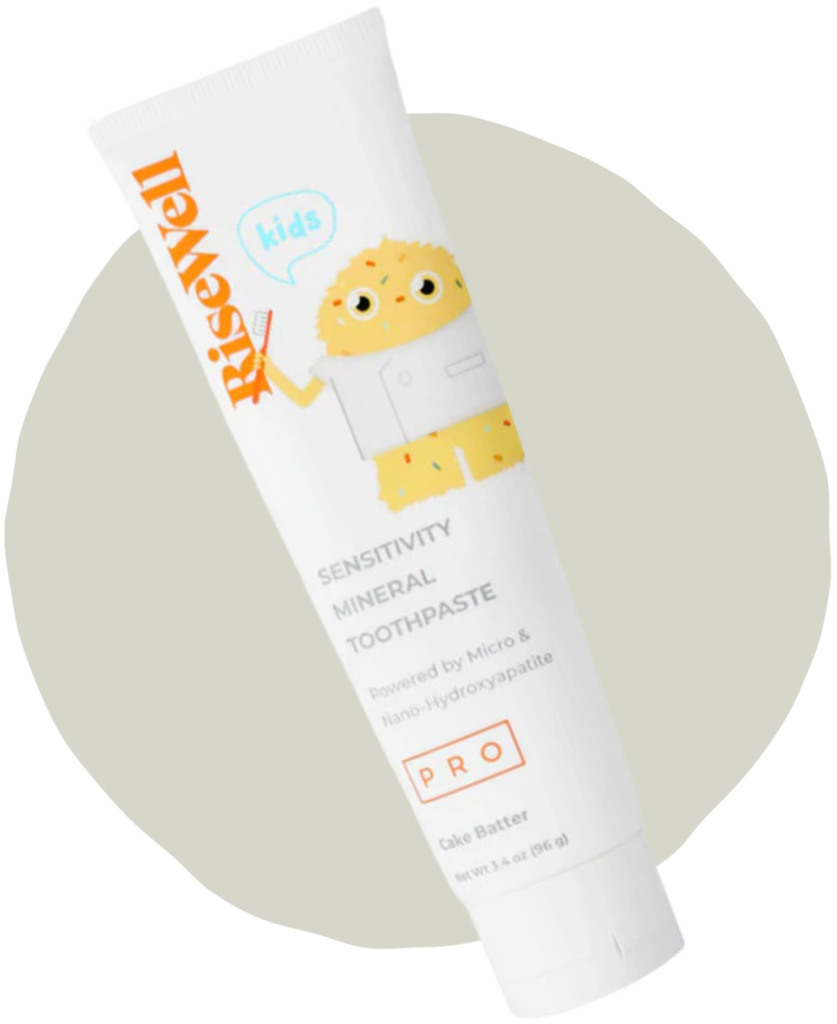
Nano-Hydroxyapatite is a “biomimetic” mineral, meaning it is biologically identical to the material that makes up 97% of your child’s tooth enamel. It works by physically filling in microscopic “cracks” and defects on the tooth surface, essentially rebuilding the enamel from the outside in. Because it is a natural component of our bodies, it is non-toxic and safe if swallowed by little ones still learning to brush.
Recent studies, such as the 2021 Paszynska trial, have shown great promise for Hydroxyapatite, declaring it to be “non-inferior” to fluoride. However, critics note that this study was funded by a company that manufactures the specific hydroxyapatite toothpaste used in the study and only compared its results to a very low-dose fluoride control toothpaste (500 ppm) rather than a standard concentration children’s toothpaste (1000ppm). Additionally, some researchers argue that the study’s one-year duration and specific statistical margins require further long-term, independent validation to fully prove equivalence to the “gold standard” of fluoride. Despite these critiques, the study remains a vital piece of the growing body of research supporting biomimetic dental care.
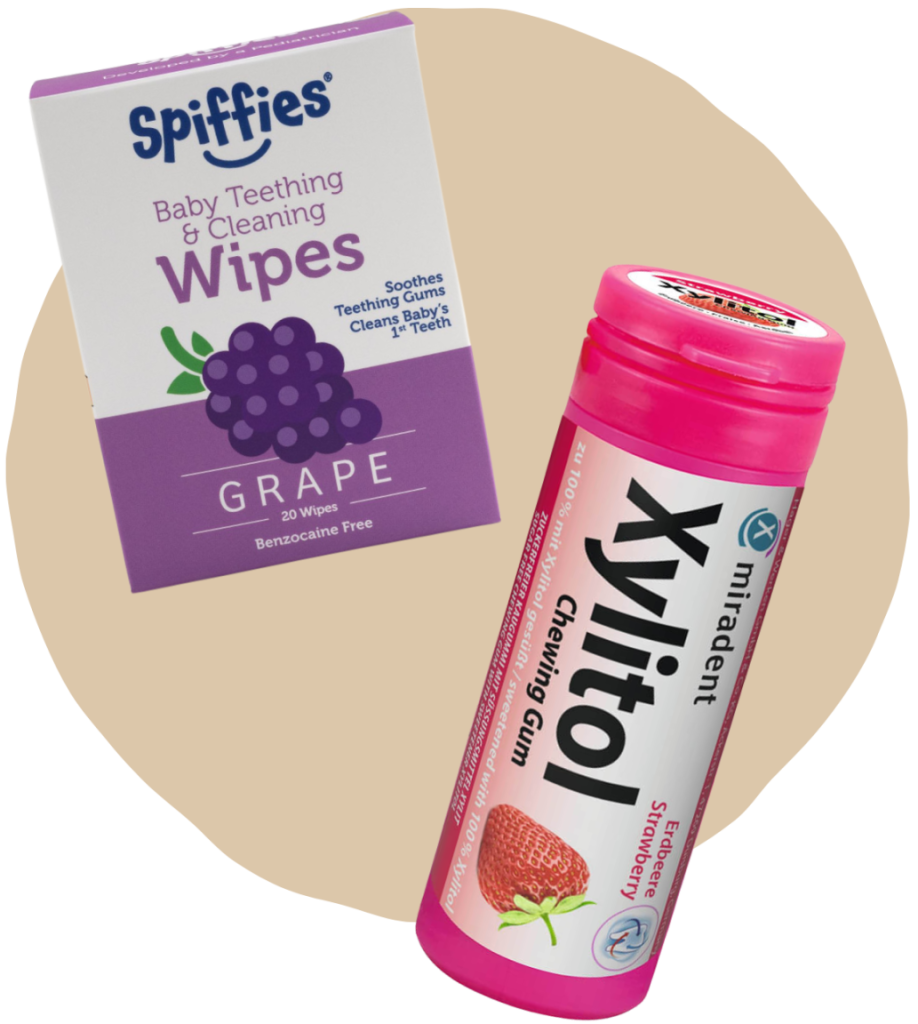
Xylitol works by interrupting the metabolic process of Streptococcus mutans (the “sugar bug”), the primary bacteria responsible for tooth decay. These bacteria ingest the xylitol but cannot break it down for energy, which eventually starves the bacteria and prevents them from sticking to the teeth as plaque.
It is important to understand that while xylitol is an excellent “bacterial manager,” it does not contain the minerals necessary to physically rebuild or harden tooth enamel. To ensure your child’s teeth are both clean and strong, we highly recommend using xylitol in conjunction with a remineralizing agent (such as Fluoride or Nano-Hydroxyapatite toothpaste) which provides the structural building blocks the teeth need.
At your child’s checkup, Dr. Mekel may recommend a safe and quick professional fluoride treatment. These in-office treatments use a higher concentration than what’s found in toothpaste or tap water, providing an extra layer of defense for growing smiles.
We’ll always discuss your child’s unique needs and help you choose the right level of fluoride protection at home and at the dental office.


At Pacific Coast Pediatric Dentistry, Dr. Elite Mekel and our caring team are committed to helping your child grow up with a strong, confident smile. If you have questions about fluoride or want to know if it’s right for your child, we’re here to help!